
How to Check Your AC Ducts Yourself Safely
You don't need special tools or training to make useful observations about your AC. These checks help you decide whether professional help is needed — and what type.
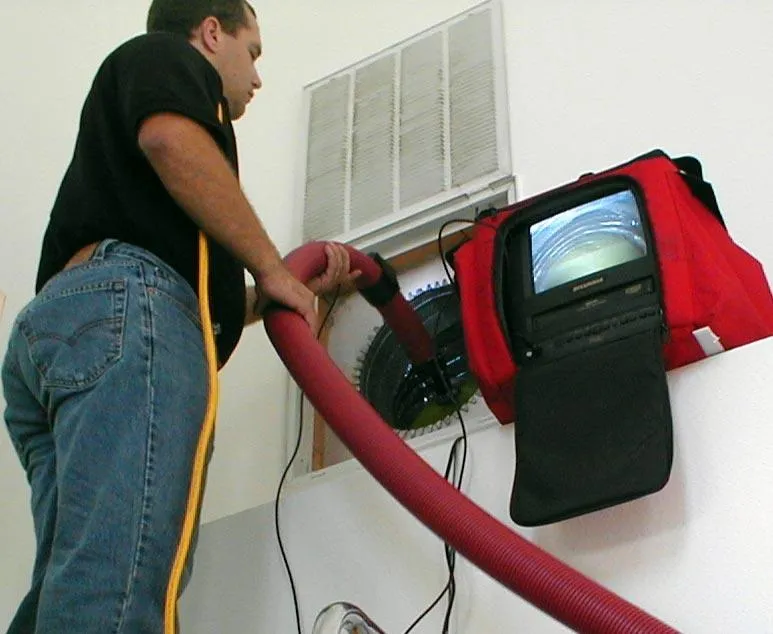
The goal is to gather information, not to fix anything.
These checks take 15–20 minutes and need only a flashlight and your eyes. You are looking for visible conditions that guide your next decision: duct cleaning, HVAC servicing, moisture control, or no service at all. Document what you find with photos — professionals can often give guidance from photos alone.
Tools for a DIY Inspection
You probably have everything already.
Flashlight
A phone flashlight is fine. You need light to see inside accessible ductwork behind the grille.
Smartphone camera
Photos and short videos from multiple angles let professionals give preliminary guidance.
Notes app
Write down which rooms, what you see, when it happens, and whether odours are present.
Nothing else
No brushes, wires, vacuum hoses or chemical sprays. Do not open electrical or mechanical HVAC components.
A step stool (optional)
Only for a closer look at a ceiling grille. Keep your face away from the vent when the AC starts.
A damp cloth
Fine for wiping the visible grille surface only — never inside the duct.
6 Safe Checks You Can Do Now
Inspect the visible vent grille
Start with a supply vent (air comes out) and a return vent (air is pulled back).
- Is the dust light and on the surface, or heavy buildup?
- Any wet or damp marks around the grille?
- Black, brown or discoloured areas — and exactly where?
- Do all vents look similar, or is one clearly different?
Take one photo straight-on and one at an angle. Note whether the condition is uniform or localised.
Look behind the grille with a flashlight
Aim the light into an open vent and look just beyond the grille into the ductwork.
- Loose particles, dust clumps or material inside the duct?
- Is the interior relatively clean, or is there buildup and discolouration?
- Is duct insulation visible, and is it intact?
Most supply vents show some grille dust but a relatively clean duct behind — that is normal. You are looking for visible internal debris or heavy discolouration.
Watch what comes out when the AC starts
Run the AC for a few minutes and observe the vents.
- Visible dust clouds or particles when it switches on?
- Only the first few seconds, or throughout operation?
- Every time, or only occasionally? From all vents or mainly one?
A small puff at start-up can be normal. Heavy, repeated release or visible clouds are what matter.
Compare several rooms
Walk through different rooms and compare vents.
- Do all vents look similar, or is one noticeably dustier?
- Is one area or corner of the property different?
- Is dampness localised to a bathroom or kitchen, or everywhere?
This comparison often points to a dirty coil (affects all rooms), a blocked duct (one room), or a room-source issue (dust unrelated to the AC).
Note when odours appear
If you smell anything unusual from the vents, track when and where.
- Only when the AC runs, or all the time?
- All vents, or mainly one room?
- Musty / damp, stale, smoky, chemical, or something else?
Musty smells usually originate at the cooling coil or drain area, not deep in the ducts. Component cleaning often solves this faster than full duct cleaning.
Check for moisture, condensation or staining
Moisture around vents or ducts often indicates issues beyond cleanliness.
- Water dripping or pooling around the vent or ductwork?
- Damp or discoloured ceiling, gypsum or insulation?
- Brown, black or yellow marks suggesting past water damage?
If you see significant active water, stop and call an HVAC technician or building maintenance. That is a mechanical or structural issue, not a cleaning issue.
Use This Language With Professionals
Instead of this
"My AC is dirty and dusty."
"My ducts smell bad."
"I think I have mould."
"My
apartment is very dusty."
Say this
"I see visible dust clouds when the AC starts, especially in the bedroom — photos
attached."
"A musty smell comes from the bedroom vent only when the AC runs, strongest in
the morning."
"Dark material and staining around the kitchen vent, with condensation on
the ceiling nearby."
Specific descriptions let professionals help by phone or from photos. Vague complaints like "dirty" require a site visit.
What You Might See and What It Usually Means
| What you observe | Likely cause | Next step |
|---|---|---|
Dust on the grille surface, clean duct behind it |
Surface accumulation from room air; normal |
Wipe the grille; cleaning may not be necessary |
Visible particles every time the AC starts |
Internal duct or component contamination |
Professional inspection to assess scope |
Dust clouds after renovation |
Construction debris inside ducts |
Post-renovation inspection; cleaning likely needed |
Musty smell only when the AC runs |
Cooling coil, blower or condensate area |
Coil / drain inspection may be the priority |
Condensation or wet gypsum around a vent |
Insulation, drainage or moisture issue |
HVAC technician assessment; not a cleaning issue |
Apartment dusty but all vents look clean |
Room sources (carpets, curtains, doors) |
Address room sources first |
Dark staining around one vent only |
Airflow staining, moisture or material degradation |
Check moisture first; colour alone doesn't prove mould |
DIY Inspection Questions
Is it safe to open a vent grille myself?
Most grilles can be removed or unhinged by hand without tools. Do not force anything — if it doesn't come free easily, leave it closed.
What if I can't see inside the duct at all?
Some ductwork bends immediately or is inaccessible. That's fine — note it in your photos. A professional inspection camera can reach areas you can't.
How can I tell dust from mould?
You can't from appearance alone. If you see dark material in a damp area, photograph it and ask a professional. Do not assume colour means mould.
Should I clean the grille before calling anyone?
Yes — wipe the visible grille with a damp cloth. Do not insert anything into the duct or use chemicals. A cleaner grille makes it easier to see what's inside.
What if I find pest droppings in the duct?
Stop the inspection. Call an HVAC technician and a pest-control professional. The pest source must be addressed first, then the system can be cleaned.
Read More
Still deciding whether to book at all? The homepage overview walks through the decision, the common AC problems and the service options.
Share Your Findings — Start With a Photo
Once you've done these checks and taken photos, send them for preliminary guidance. Many problems don't need full duct cleaning — component cleaning, a filter change or HVAC servicing may solve it faster.